
Prepare your first romance novel for publication thoughtfully
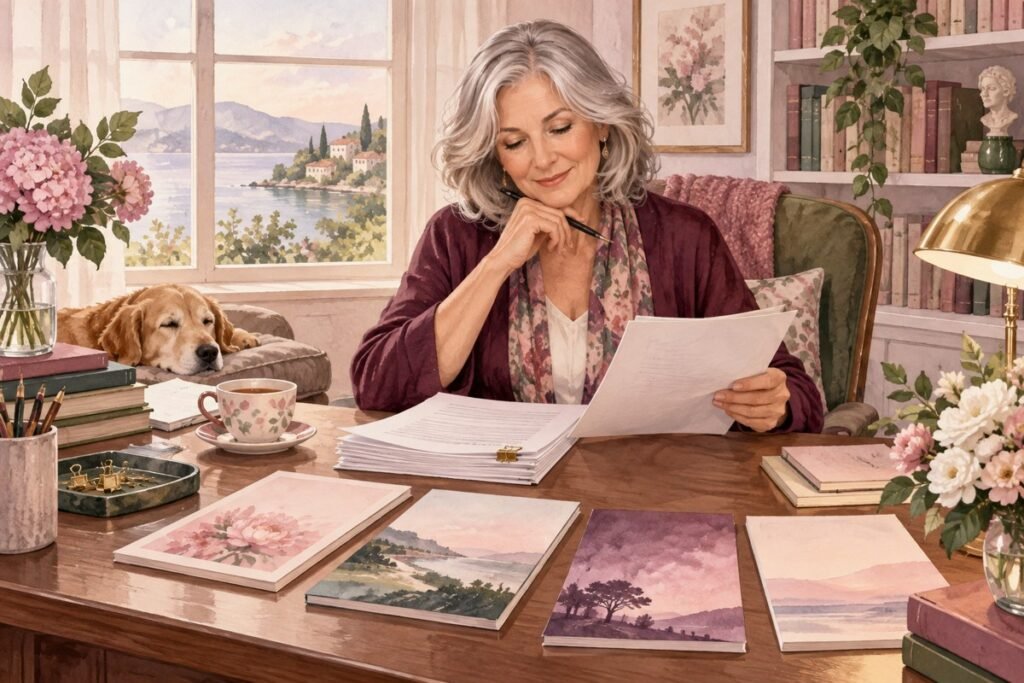
To prepare a romance novel for publication, separate finishing the story from deciding how it reaches readers. A completed draft is an achievement. It is also a starting point for revision, factual checks, presentation and a choice about your publishing route.
You can approach those decisions one at a time. You do not need to buy every service that appears in an advertisement or promise yourself a particular income to take the next step seriously.
Review the manuscript as a reader
Read for the central relationship first. Does attraction grow into trust? Are important decisions prepared? Does the ending fulfill the story's emotional promise? Then review continuity, sentences and proofreading.
Keep a list of unresolved facts and placeholders. None should remain hidden in the final file. If a technical detail affects the plot, verify it through an appropriate source rather than relying on a generated answer or a convenient assumption.
Compare publishing routes without rushing
You may explore submitting to publishers, seeking an agent where appropriate or publishing independently. Investigate the requirements of the particular route and organization, including rights, obligations and costs. Do not assume every publisher accepts the same length or material.
For paid help, ask what is included, who performs the work, how revisions operate and what rights you retain. Get scope and pricing in writing. A costly package is not proof of quality or a guarantee of sales.
Describe the book honestly
Fictional example: if your novel follows a later-life couple restoring a greenhouse, describe that story rather than advertising a dangerous mystery because suspense sounds exciting. The cover, title and description should support the experience inside.
Write a draft description naming the main person, situation, romantic difficulty and stakes. Avoid unsupported bestseller claims, invented testimonials or statements about awards the book has not received.
Check rights and AI rules
Review rights for cover art, interior images, quotations and any material created by someone else. Do not assume an image is free to use because it appeared online. Keep records of licenses and agreements.
If you use KDP, its current guidelines require disclosure to the platform of AI-generated text, images and translations, and distinguish those from AI-assisted material. Generated covers count as images under that policy. Check the current rules of every platform or publisher you use; they may differ.
U.S. copyrightability of AI output depends on human authorship, with human expressive contributions considered case by case. Keep draft histories, but do not assume records alone establish protection. Consult qualified advice when needed.
Make a realistic cost plan
List possible expenses such as editing, design, formatting, proofs and marketing. Separate necessary work from optional purchases. Set a budget before committing, and treat future earnings as uncertain.
You can want commercial success while refusing profit promises. A good publishing plan protects your finances and helps you offer readers a carefully prepared book.
Your next step
Choose one route to investigate, list its unanswered questions and finish one manuscript check. Publication is a sequence of decisions, not a single leap. Move forward with information you can verify and a story you are ready to stand behind.
Original AI-generated editorial illustration. Characters and settings are fictional.