
Romance Keepsakes: Small Objects, Growing Love
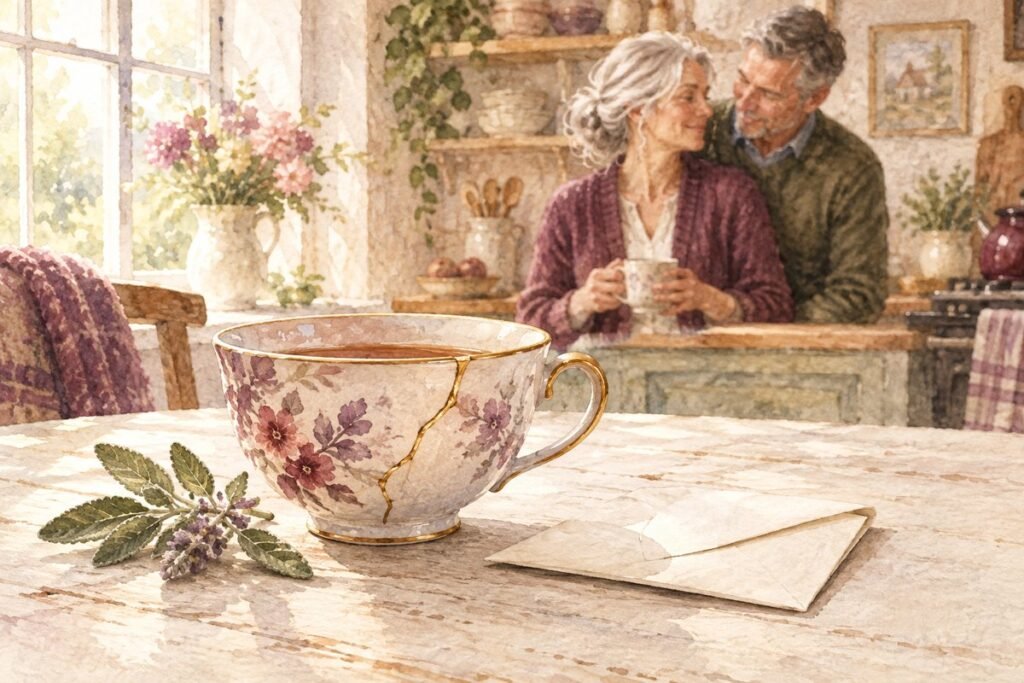
A chipped teacup. A recipe card. A scarf tucked into the back of a drawer. A small object can give your romance novel a quiet thread that readers recognize each time it returns.
Try choosing a keepsake that matters to one of your characters. Then let its meaning change as the relationship grows. You do not need an expensive heirloom or an elaborate history. Something ordinary may be easier to bring naturally into a scene.
Start with a private meaning
Ask what the object means before the couple falls in love. Is it a reminder of a happy time? A promise the character has outgrown? A small comfort she is reluctant to explain?
Fictional example: Nora, 62, keeps a chipped blue cup from the cafe she once owned. She drinks from it every morning, although she tells visitors it is simply her favorite. To her, it represents the independence she fears losing if she lets someone close.
Let the other person notice
A keepsake can create an opening for attention rather than a speech. The love interest might remember which cup she chooses, ask before moving it, or listen when she finally shares its story. A thoughtful action can make the object part of their relationship without turning it into a grand romantic gesture.
In Nora’s story, her new companion does not replace the cup with a shiny set. He makes space for it on the shelf in the kitchen they are arranging together. The cup still belongs to her. Its place in their shared life suggests that closeness need not erase independence.
Bring it back with a purpose
Choose a few moments when the object reveals a new choice. At first, Nora hides the cup when someone visits. Later, she lets him use it. Near the ending, she leaves it beside his mug. Each appearance should add something; you need not mention it in every chapter.
Keep the meaning light on the page. Let readers see what your character does before explaining what it means. If every appearance comes with a paragraph about symbolism, try removing the explanation and reading the scene again.
A ten-minute writing exercise
Choose one object for your own couple. Write a sentence about what it means at the beginning, one about what happens to it halfway through, and one about where it belongs at the end. Then write a short scene in which one character notices it but does not yet know its story.
You may discover a tender detail worth keeping. If not, the exercise still gives you a new way to listen to your characters. A love story can grow through very small things.
Original writing exercise and fictional example from The Writing Room. Illustration: original AI-generated editorial artwork.