
The Wise Elder: Writing the Mentor Who Nudges Love Along
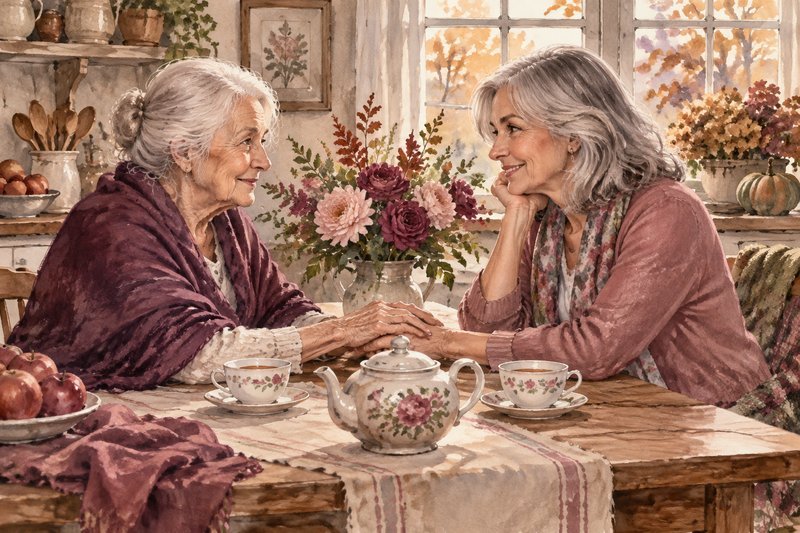
Every good love story has someone who sees the truth before the lovers do. A grandmother with sharp eyes. An old friend who has buried two husbands and learned what matters. A neighbor who waters the roses and misses nothing. The wise elder is one of romance’s oldest and best-loved figures, and writing her well gives your story a heartbeat of experience. Written badly, she becomes a meddling cartoon. The difference is worth studying.
Wisdom is earned, so show the earning
A mentor who simply announces the right answer robs your lovers of their own journey. The elder we believe is the one whose advice carries the weight of a life actually lived. She does not say “go to him, child.” She says, “I once let a good man leave on a train because I was too proud to run, and I have regretted it for fifty years.” Now her counsel is not a rule. It is a scar, offered as a gift.
Give her a history, even if you only hint at it. A wedding ring she still wears though her husband is long gone. A locked drawer of letters. A story she starts to tell and then waves away. The reader does not need the whole past, only the sense that the past is there.
Let her nudge, never steer
The wise elder opens doors; she does not push people through them. Her best tools are small: an invitation extended to exactly the right two people, a question asked at exactly the wrong moment to avoid, a truth spoken plainly when everyone else is being polite. If she engineers the whole courtship, your heroine becomes a passenger. The elder’s job is to remove one obstacle of fear, then step back and let love do its own work.
A fictional example: Miss Agnes, eighty-one, asks Judith to help her sort buttons every Tuesday. Judith’s late husband’s best friend always seems to be there too, fixing a hinge, returning a ladder. It takes Judith six weeks to notice the buttons are already sorted. “I wondered when you would catch on,” Miss Agnes says, and pours the tea. She arranged the meetings. She never once arranged a word of what was said at them.
Give her a stake of her own
The finest elder mentors want something too. Not meddling for its own sake, but a longing of their own: to see the family healed, to watch a house fill with laughter again, to pass on a lesson before it is too late to matter. When her stake is real, her meddling is love, and the reader forgives it all.
So give your elder a scar, a steady hand, and a reason to hope. Then let her do what the old do best in stories and in life: see clearly, speak briefly, and trust the young – or the young again – to find their own way home.